Plan around the path to the work
- Doorway clearance and corridor turns decide platform width and stowed height.
- Elevator car size and weight limits can cap the lift class that reaches upper floors.
- Floor protection needs—epoxy, tile, or sealed concrete—push the choice toward non‑marking tires and lighter slab weights.
Local conditions that influence the pick
- Research and precision manufacturing spaces in Durham tend to favor electric power and quiet operation. Battery drive limits emissions and noise near sensitive equipment.
- Humid summers mean more condensation at thresholds and docks; traction and grade on smooth floors become part of the comparison.
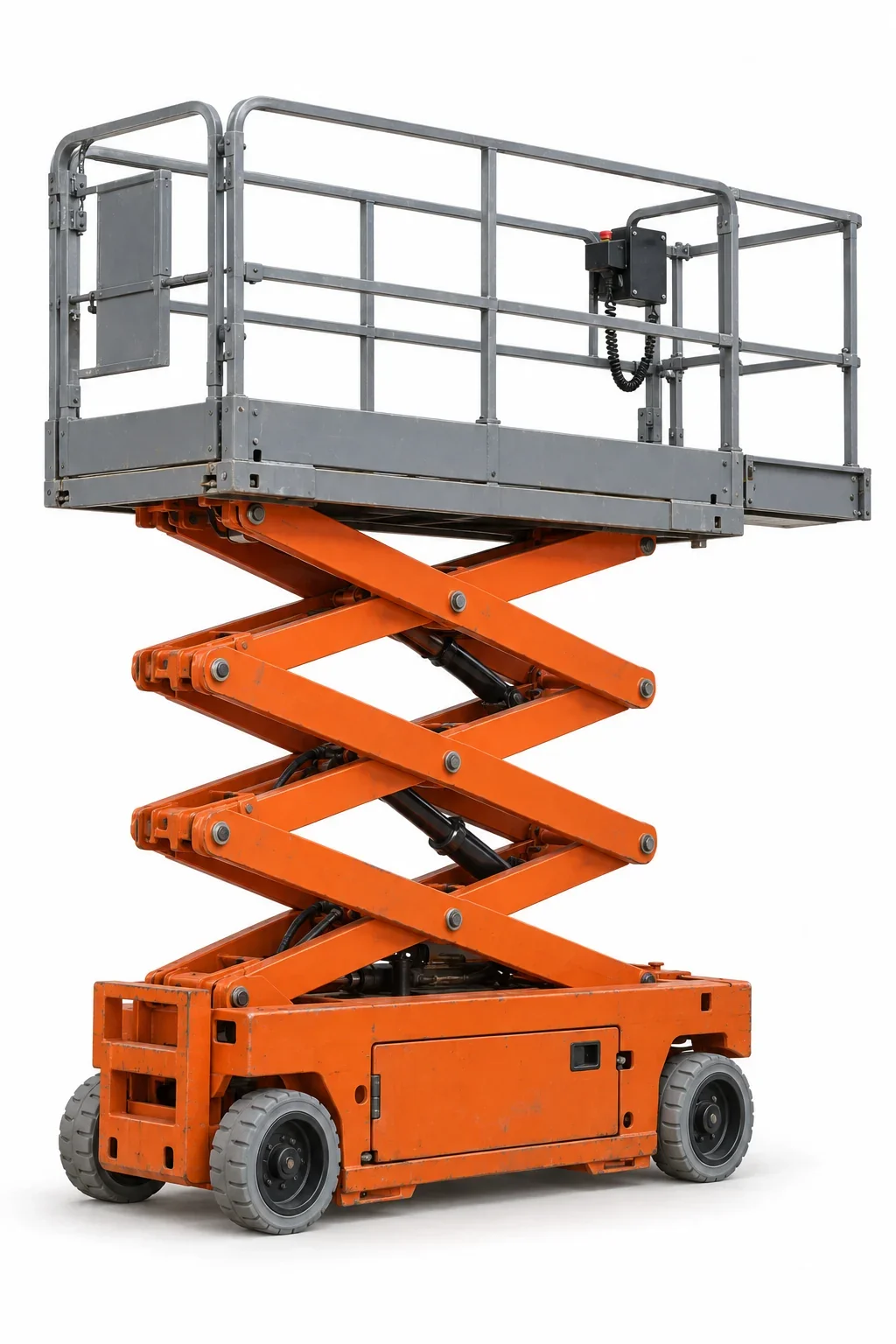
Key measurements for electric scissor lifts
- Working height vs. ceiling height, allowing room for ducts and lighting.
- Platform capacity that matches tools, filters, light fixtures, or cable runs.
- Stowed dimensions for doors and service elevators; turning radius in corridors.
When a different aerial type fits better
- If the task is offset from the parking position—over equipment, furniture, or production lines—an articulating boom at /boom-lift-rental/ or /aerial-lift-rental/ may reach it without moving machinery.
- For exterior transitions, curbs, or gravel lots, compare units at /rough-terrain-scissor-lift-rental/.
Typical interior tasks in Durham
- Facility maintenance in climate‑controlled areas
- Racking, signage, sensors, and low‑impact MEP work
- Commissioning and punch‑list items during fit‑outs
Actual conditions, the selected unit’s instructions, and site procedures govern any elevated work in Durham, NC.