Start with the placement: where must the load land?
Identify the elevation, horizontal offset, and side reach to the drop point. Roof edges, mezzanine doors, and staging racks demand different boom lengths and carriage options. If the task is strictly at floor level inside narrow aisles, a forklift likely fits better.
Surface and terrain in Durham
Clay-heavy soils can soften after rain, affecting stability and travel. Rough-terrain tires and adequate ground clearance are common needs outdoors. For hardstand work on slabs at industrial sites, consider units with foam-filled or non-marking options to reduce floor impact near loading bays.
Capacity across the boom curve
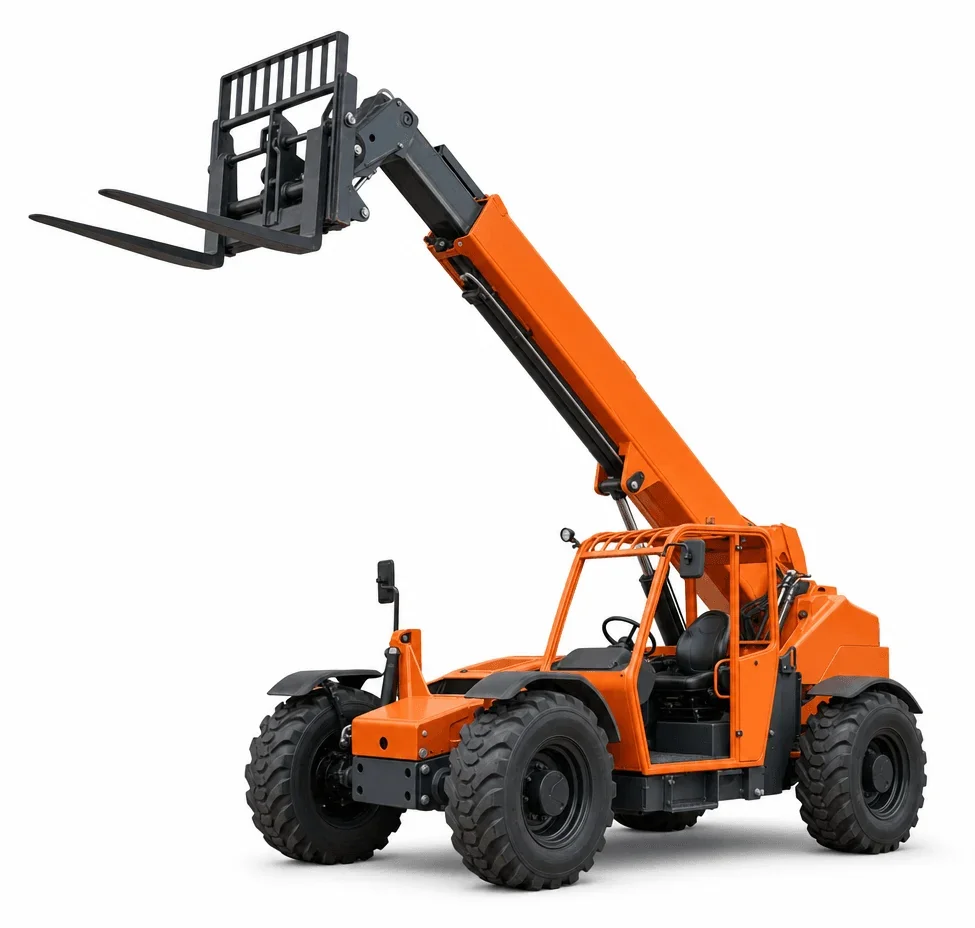
Telehandler charts reduce capacity as the boom extends. Plan with the heaviest load expected at the farthest reach you anticipate. If you only need vertical deck access with people rather than materials, review boom lifts instead of material handlers.
Approach path and logistics
- Gate widths and turning radii at staging yards
- Slope transitions at curb cuts and dock aprons
- Headroom under canopies where the boom must pass
Durham industry mix considerations
Local life-science and manufacturing spaces often require quiet, low-emission equipment near occupied areas. When staging close to controlled interiors, limit exhaust exposure and tire marking. Coordinate material drop zones on firm ground to avoid rutting near landscaped edges.
When another category is better
- Repetitive pallet movement on smooth indoor floors: see forklifts.
- Personnel lift to access elevated work: see telescopic booms or articulating booms.
Quick planning checklist
- Target height and maximum horizontal reach
- Heaviest load weight and load dimensions
- Ground conditions after recent weather
- Access widths, slopes, and headroom along the route
- Emissions and noise sensitivity near occupied spaces