Define the duty: runtime, load, and noise envelope
- Runtime: note expected continuous hours between refueling or charging, plus peak vs. steady load. Long evening work windows and summer storms locally push toward larger fuel tanks or efficient LED towers.
- Load type: clean power for sensitive indoor tools and lab support favors inverter-style units; general site power tolerates conventional output.
- Noise: work near active facilities often requires quiet-rated generators and low-glare LED fixtures.
Durham terrain and placement
Clay-heavy soils can pump and rut after rain. If a generator or light tower must sit on unimproved ground, account for ground-bearing pressure and stabilizer pad area. For paved courtyards or coated indoor floors, mind turning radius and non-marking tires on the delivery carrier. Where masts rise near trees or ducts, confirm swing clearance and maximum deployed footprint.
Access route and footprint
- Gate and corridor width: measure the narrowest pinch point to size the chassis and delivery method.
- Grade and surface: wet grass and compacted clay require wider tires on towable towers; for rooftops or garages, confirm structural limits and ventilation.
- Staging: leave room for refueling, cable routing, and mast rotation without blocking emergency paths.
Light levels and mast height
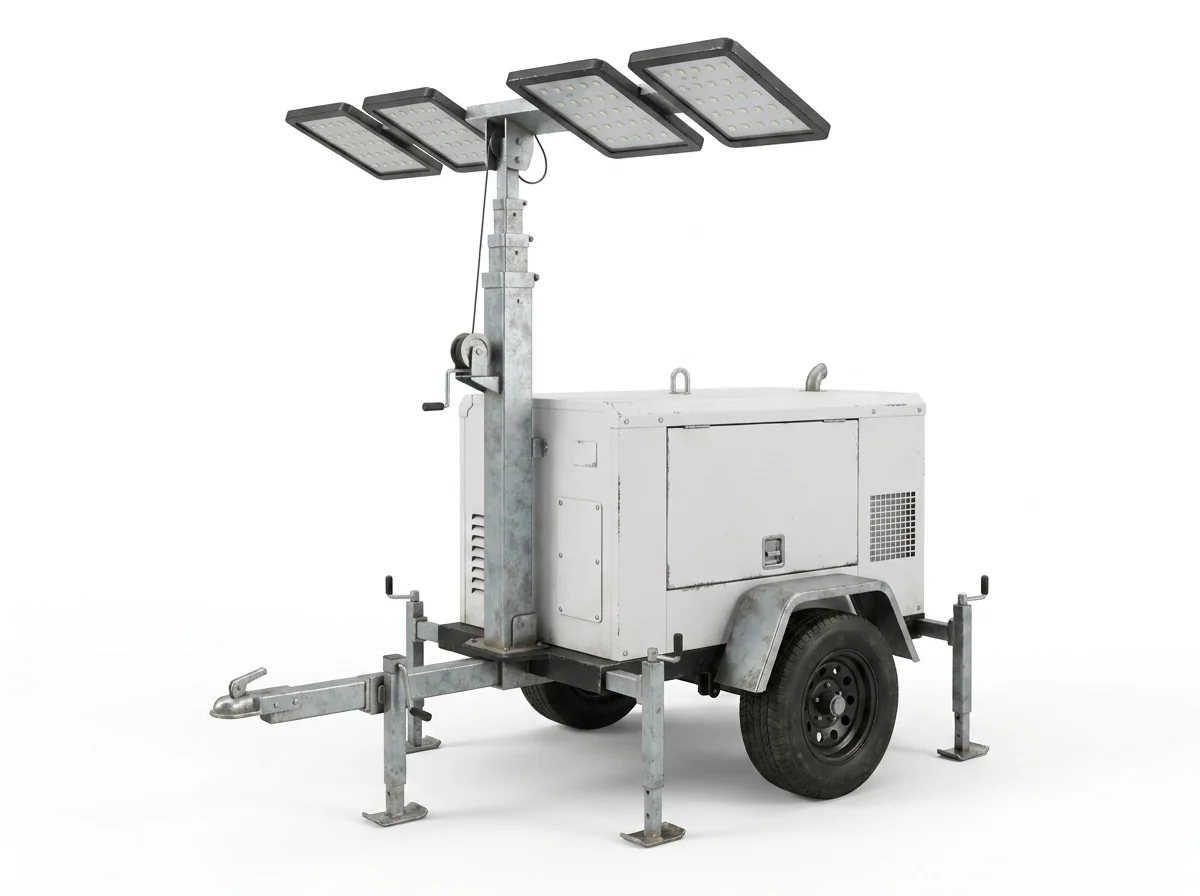
Local distribution buildings and industrial sites often mix high-bay interiors with shaded exterior aprons. Estimate target lux/foot-candle by task and distance, then consider LED output, beam pattern, and mast height. Taller isn’t always better in windy, storm-prone afternoons—verify site procedures and unit instructions for deployment limits.
Indoor versus outdoor power
- Indoor/lab maintenance: prioritize low-emission electric or inverter units with clean power and compact footprints. Coordinate with electric scissor lifts or vertical mast lifts that may share charging circuits.
- Exterior construction or night work: durable towable towers or skid-mounted sets match rough-terrain scissor lifts and telehandlers on uneven lots.
Weather and continuity
Frequent summer precipitation argues for weather-resistant enclosures, covered distribution, and redundancy where operations cannot pause. For sites that must stay illuminated during brief thunderstorms, review automatic start features and fuel reserve planning.
Related comparisons
- Overhead access while lighting: boom lifts or articulating booms for angled fixtures.
- Power + material handling: coordinate with forklifts.