Job geometry first
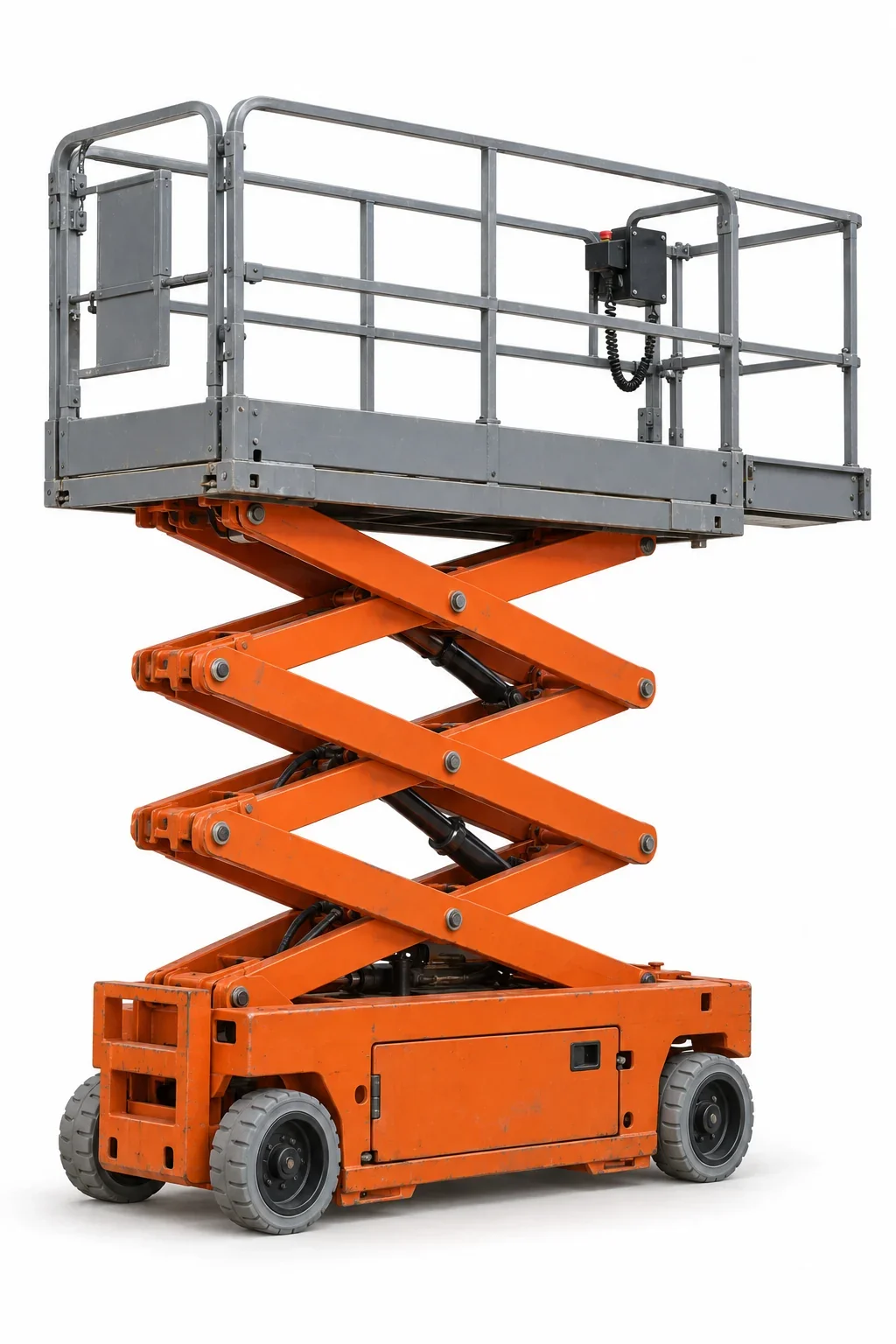
- If the work sits straight overhead—siding, glazing, steel, or facade work—scissor lifts give wide platforms and high capacity.
- When the task sits beyond an obstruction, consider booms at /boom-lift-rental/ or /aerial-lift-rental/ for up‑and‑over reach.
Durham factors that affect selection
- Clay-rich soils can stay slick after storms, so tire size, tread, and gradeability matter for staging and shuttle moves.
- Summer showers and humidity encourage planning for drainage and stable laydown areas to minimize sinking or tilt alarms.
Sizing and constraints that narrow options
- Working height required at the face of the structure.
- Platform capacity for crews, sheathing, panels, or tools.
- Width and turning space between site obstacles, fencing, and material stacks.
- Approach conditions: curbs, ramps, trenches, and temporary stone bases.
When rough‑terrain scissors make sense vs. booms
- Choose scissor geometry when the line of work is planar and accessible from directly beneath.
- Choose booms when reach over utilities, landscaping, or lower roofs is needed. See /boom-lift-rental/ for articulating and telescopic types.
Related indoor/outdoor comparisons
- Smooth slab and interior work: /electric-scissor-lift-rental/
- Additional aerial options: /aerial-lift-rental/
Actual conditions, the selected unit’s instructions, and site procedures govern any elevated work in Durham, NC.